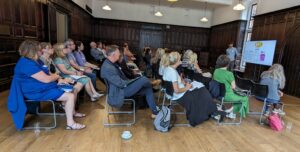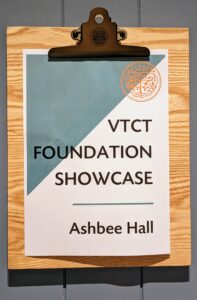
On Friday 14 July, around 40 research colleagues and charity representatives from across the visible difference arena gathered for the annual VTCT Foundation Showcase, held once again at Toynbee Hall in London.
Keeping true to the venue’s heritage as a centre for social reform and research, the programme gave Appearance Collective attendees an opportunity to share their latest learnings while discovering more about the VTCT Foundation (VTCTF)’s grant programme, including the launch of the new Equality, Diversity and Inclusion (EDI) funding stream.
Funding for the future
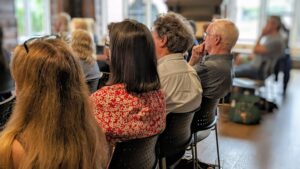
While VTCT remains a time-limited foundation that intends to spend out, in her welcoming address, founding trustee Rosanna Preston reassured attendees that it remains committed to supporting projects through small grant applications.
Over the course of the day, the trustees also reminded those present that, with Amanda Shepard sadly moving on from her current role with VTCTF, the foundation is recruiting for two part-time roles to ensure it is well placed to continue to support the visible difference community.
“I absolutely love these days, as it’s when we hear all the wonderful stories and forge new collaborations.”
Rosanna Preston, VTCT Foundation Trustee
Morning presentations
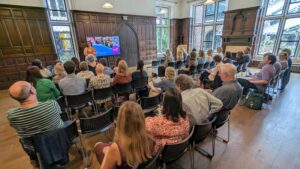 Mikaela Conlin-Hulme kicked off the morning’s talks with an inspiring round-up of the Cleft Lip and Palate Association’s (CLAPA) recent challenges as it moves towards a more sustainable fundraising model.
Whilst still only 11 months into her role as Head of Income, and just halfway through CLAPA’s one-year grant, Mikaela described how VTCTF funding has already proved invaluable for the #SaveCLAPA emergency appeal’s success. From learning how to ask for donations unapologetically to diversifying the charity’s income stream to spread risk, the audience also heard how embedding fundraising across the entire company through a culture change helped enrol team members and secure that all-important trustee buy-in.
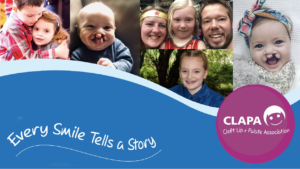
“I have to thank the VTCT Foundation for funding me so that our benchmarking and pipeline evaluation could happen. Without their support it could have been a very different story. We’re not there yet, but – six months in – we’re definitely moving in the right direction.”
Mikaela Conlin-Hulme, Head of Income, CLAPA
 Next to the stage was Professor Diana Harcourt, Co-Director at The Centre for Appearance Research (CAR), who explained how the organisation is 12 months into a four-year research programme which builds on its previous five-year VTCTF-funded priority-setting exercise.
Attendees heard how this new round of work focuses on two key streams, the first being social media and visible differences. To illustrate the programme’s potential for the visible difference community, the research team talked through some of their investigations into how social media could be used as a force for good, promoting greater acceptance of diversity of appearance while reducing stigmatising attitudes.
Di also described how CAR is developing practical resources and supportive interventions for people impacted by visible differences. With research so far indicating a wide range of format preferences, from podcasts and e-books to residential weekends, CAR is working towards a user-focused toolkit with practical resources that people with different support needs can access any time they are struggling.
“Our ‘applied research’ ethos means what we do needs to make a difference and have a practical impact. We always put people with lived experience at the heart, and it is a very collaborative process, so coming to events like this make you realise the ways we are helping – and vice versa.”
Professor Di Harcourt, Co-Director at The Centre for Appearance Research (CAR)
Following the launch of the VTCT Foundation’s career development programme at last summer’s conference, grant holders had the chance to meet the two award recipients in person this year, and hear about their research progress.
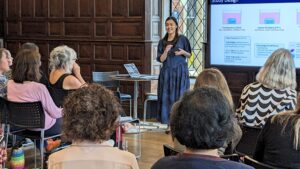 Having given the audience a light-hearted disclaimer about the detailed science to follow, Cynthia de Courcey’s passion around 3D bioprinting’s potential to advance facial cartilage tissue engineering shone through her presentation. It was fascinating to hear about the developments in nanocellulose (plant-derived) as a bio-ink through her research training fellowship with Action Medical Research and Swansea University, and learn how the ability to load ink carriers with the patient’s own cells could provide a safer alternative for facial reconstruction in the future.
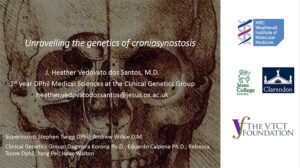
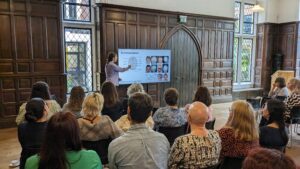 Since joining the MRC Weatherall Institute of Molecular Medicine at the University of Oxford from Brazil last autumn, Heather Vedovato dos Santos has been able to help continue the Clinical Genetics Group’s long-term research into craniosynostosis. In particular, given the team’s quest to identify the genetic causes of this skull malformation, she summarised her DNA-focused work looking into the role of BCL11B and stressed the significant impact a diagnosis can have for those affected – something that resonated with everyone present.
Afternoon presentations
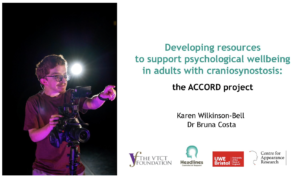
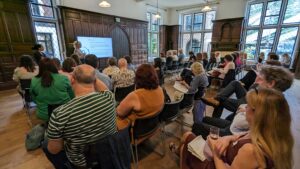 The first talk of the afternoon came from Headlines Director Karen Wilkinson-Bell and CAR’s Dr Bruna Costa, who introduced a different dimension on craniosynostosis – one with a focus on creating online resources for affected adults.
Recognising how the current support provision for adults with craniosynostosis is very limited, and more geared towards families at the start of their journey, the charity’s research-led ACCORD project set out to address these gaps. Watching one of the video resources, attendees had the chance to hear from one of the participants on the theme of ‘being different’. Will explained how important it was to meet people with a similar craniofacial condition, embrace being different and enjoy their life to the fullest.
“Our ambition is a world where the impacts of craniosynostosis are no more. Our first piece of research a few years ago was a wake-up call about the lack of support for affected adults. Working with CAR, we therefore resolved to address gaps in that area and none of this – including our initial study – would’ve happened without VTCTF’s support.”
Karen Wilkinson-Bell, Director, Headlines
Trustee Tony Lau Walker then introduced Dr Hannah Saunders, a Research Fellow at Queen Mary University of London, and VTCTF’s new EDI funding stream.
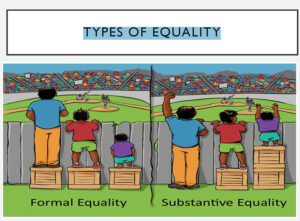
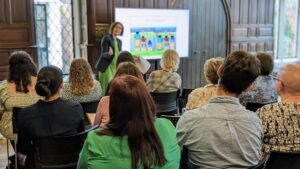 Hannah talked through the types of equality and some of the challenges around defining the concept, explaining how it can sometimes mean treating people differently to ensure a fair outcome and avoid disadvantaging certain groups even more.
She also described the types of campaigns that could be welcomed by the new EDI fund, from ensuring website imagery is representative to installing billboards in hard-to-engage communities who may not currently be accessing services. Another welcome tip was for attendees to consider submitting joint applications with other visible difference organisations in an effort to improve outcomes whilst maximising resources.
“Working with charities, we realised solicitors would have limited online resources to access around visible difference. So we co-created practical advice to give them strategic guidance, including possible legal arguments, on areas such as going back to work and what clients might – or might not – need to disclose to their employer.”
Dr Hannah Saunders, Research Fellow, Queen Mary University of London
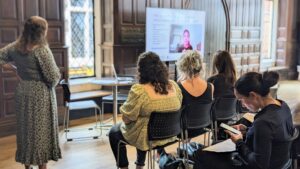 This message of why EDI is such a priority for Appearance Collective charities, and how CAR’s expertise could help identify potential EDI gaps while helping coordinate efforts across groups, was then reinforced by Dr Nicola Stock, CAR Associate Professor, via a pre-recorded video.
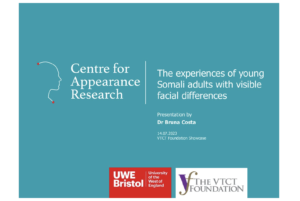
 Supporting the importance of ensuring research is truly representative of the population, CAR’s Dr Bruna Costa returned to present her experience of using UK Somali diaspora as an example of how to engage groups and identify different opportunities to overcome discrimination. Her advice to organisations is to be mindful of possible linguistic, logistical or societal barriers to participation, as well as culturally-sensitive motivations to engage with existing services.
The day concluded with Dr Hannah Saunders recounting how her recent VTCTF-funded project has seen her take the case for appearance-related equality to the United Nations alongside Face Equality International. She also shared some of the key findings from her two-year project to improve workplace equality for people with a visible difference, including her newly-created employer guidance for an appearance-inclusive workplace.
“If you ever wanted a snapshot of how rich and diverse this community is, today is it.”
Amanda Shepard, VTCT Foundation’s outgoing Grant Manager
Thank you to everyone who shared their experiences in this thought-provoking conference and participated in the many practical discussions that each session inspired.
To find out about upcoming VTCT Foundation events visit https://vtctfoundation.org.uk/whats-happening/events/.