

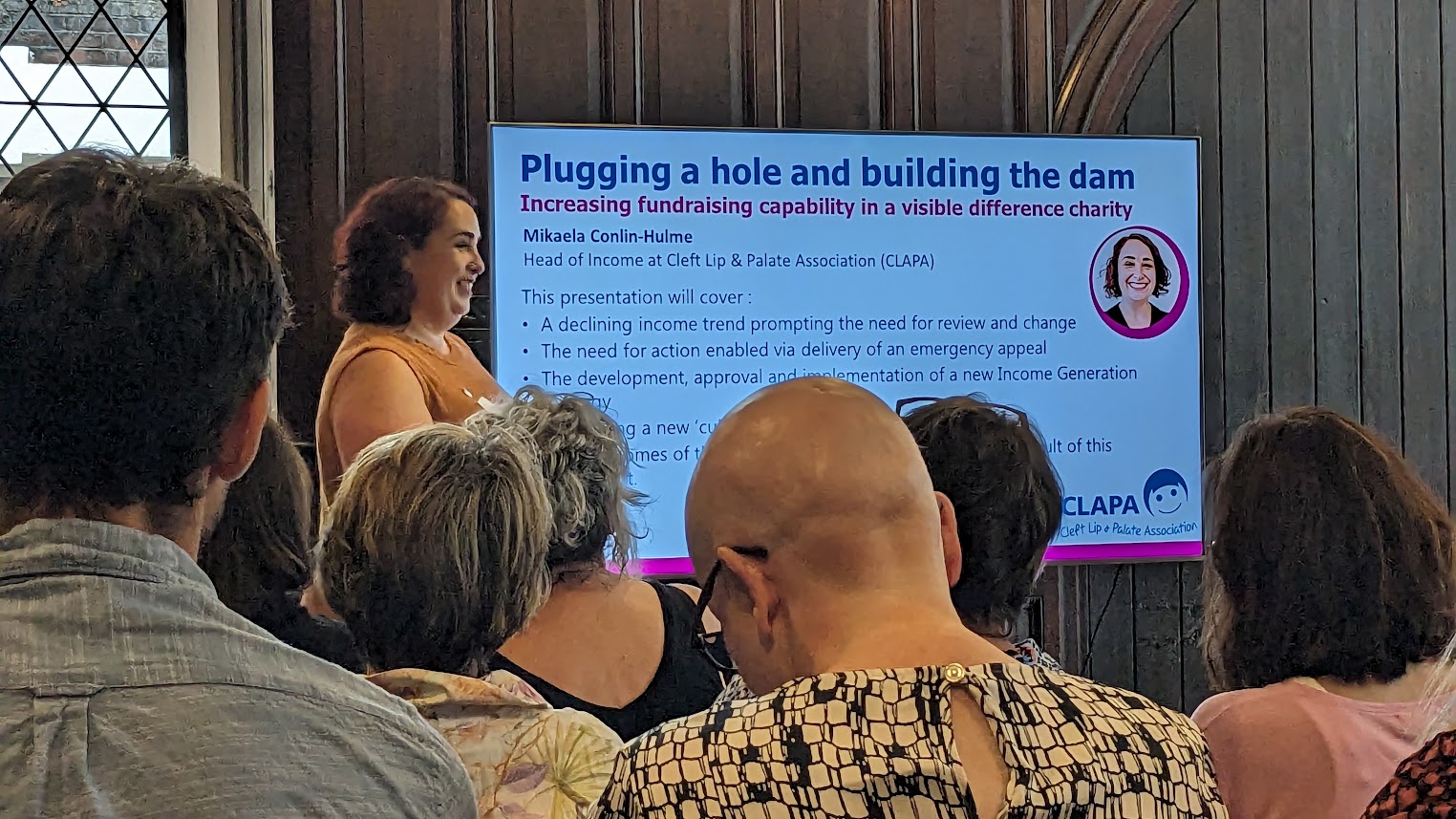
VTCT Foundation London Showcase: 14th July 2023
How Developing A Fundraising Culture Made Clapa Stronger
When Mikaela Conlin-Hulme joined the Cleft Lip and Palate Association (CLAPA) last year as the new Head of Income, she knew the journey towards a more sustainable funding model would be a challenging one.
A year into the role, Mikaela talks through the emergency fundraising measures that she helped put in place to keep the charity afloat, including the successful #SaveCLAPA appeal. And she explains how a cultural shift proved one of the biggest levers to making a positive change.
What was the biggest fundraising challenge when you joined CLAPA last year?
As with most charities, the pandemic was a major contributor to a steep decline in our income levels. CLAPA receives no government or NHS-funding, so we’ve always relied on the generous support of our loyal community. Having fallen behind on our 2022/23 targets, we realised a dramatic change in approach was needed to help us move away from our long-standing reliance on individual fundraising and challenge events, which had historically contributed the biggest chunk to our income stream.
We determined that we needed to be collectively braver across the team when it came to asking for money. And, in doing so, we not only realised we needed to make our brand messaging clearer so people outside our usual community understood how their donations would make a difference, but we also recognised that a wider cultural change was essential to help us deliver our targets.
Whilst no one wanted our emergency appeal, it certainly demonstrated that we were dealing with a very serious situation. And it highlighted how, as a relatively niche cause, our community simply wouldn’t receive the support they needed without us here to help them.
How did changing CLAPA’s internal culture impact your fundraising approach?
It’s natural in any organisation for people to focus on their own work priorities, and this becomes even more acute when you have a lot of part-time staff. But when you’re a small or medium-sized charity, the delineation between team responsibilities becomes a little less clear-cut. Especially when salaries are your biggest outgoing expense.
Recognising that it wasn’t that people didn’t want to help, but perhaps more that they didn’t have the tools or capacity to do so, one of our biggest moves was to bring everyone across every CLAPA team into the conversation to help communicate the urgent situation we were all in.
Being very transparent with the whole team, treating our people as key stakeholders, and including them in the emergency planning, ensured they were all involved in the planning process at different points, and therefore more closely invested in the charity’s future.
At the same time, we recognised how crucial it was to ensure our trustees were fully engaged in all things fundraising too. By securing their buy-in we were able to embed fundraising into the wider CLAPA strategy and better understand how to make the most of their skills, including giving them clear requests for anything practical we might need them to do, such as sharing our appeals on LinkedIn. We have definitely seen the difference, and at our trustee meetings the board now have a much better insight into our fundraising then they did previously.
Changing cultures is always a challenge, and this kind of change doesn’t happen overnight. But, by celebrating our fundraising success stories internally and highlighting how other teams’ actions and ideas positively impacted our income, we’re already in a stronger position. Everyone wants to be part of something successful and we’re definitely much more forward-focused as an organisation now when it comes to fundraising.
What advice would you have for other organisations in a similar position?
If Covid did anything positive, it was to highlight the importance of diversifying income streams to better spread risk and ensure costs can be covered year on year – no matter what.
Our biggest learning over the last year was, therefore, that we need be willing to be bolder in our actions. And, in particular, we needed to stop being so apologetic when asking for money; something we know will resonate with a lot of similarly-sized charities and community-led organisations, especially those dealing with specific conditions whose users – and donors – are possibly considered a bit niche.
We were blown away by the response to our #SaveCLAPA appeal. When we realised our community had the right to know the truth of our situation, we couldn’t have predicted the way that they took the message and owned it, embracing the options we gave them to help. In a very basic way, it showed how important our services were to those who had been supported by our work in the past, and helped convert our loyal community into proactive cheerleaders who helped us spread the word and raise essential funds.
Involving our wider team as well as service users also brought about a bigger range of unexpected yet equally-welcomed benefits, from a £20,000 corporate donation to pro-bono offers to support our appeal in different areas, including a VAT expert!
What role did VTCT Foundation play in CLAPA’s journey?
Without VTCT’s funding, it’s fair to say this could have been a very different story. Their grant allowed us the chance to take a step back, review our fundraising situation and play to our strengths. Our SWOT analysis showed how our community was one of our biggest assets, so involving service users more closely in our future was a no-brainer.
I also have to thank VTCT for funding my role so the benchmarking reviews, pipeline evaluation and scenario modelling could happen. We hope our three-year strategy, which we embarked on in April this year, will focus around sustainability, diversity and research, and this approach will allow us to spread risk, reach new audiences and maximise all possible avenues.
Our quarterly update reports to VTCT are also a valuable opportunity for us to evaluate our progress and tweak our plans accordingly with trustees – a very useful exercise that smaller charities may not always have the opportunity to do.
Having worked in other charitable sectors before joining CLAPA, it definitely feels unique to have so much collaboration within the visible difference community. And the way VTCT Foundation focuses on asking charities what they need, rather than simply telling them what they will fund, feels like a much more practical and supportive approach.
What’s next for CLAPA?
We’re still very much on this journey to our new model, and our strategy was only approved in April so we’ve barely scratched the surface. But we now have clear fundraising objectives to meet, and we’re starting to see the successes come through. So we’re in a far stronger position now in terms of appeals, messaging, and more sustainable fund generation than ever before.
And, whilst we know the most important thing is that if we decide to do something we need to do it really well and deliver, we’re also starting to be more courageous about dreaming big. Which means I’m going to need to start devising even more creative strategies to help source the additional funding to finance these bigger and bolder ideas!
You can access Mikaela’s presentation from the 2023 London Showcase event about CLAPA’s experiences of “plugging a hole and building the dam” here.