

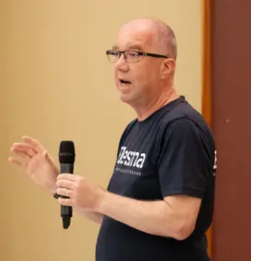
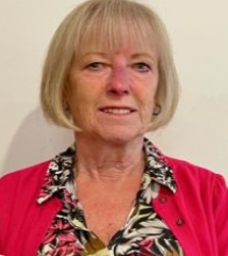
Speaking at the VTCT Foundation 2025 July Showcase event, BLESMA’s Operations Director, Tony Bloomfield and the ED Society’s Founder and CEO, Diana Perry, shared their experiences of establishing support circles for the families that they serve.
When someone lives with a visible difference, the impact ripples far beyond that individual. And families often experience invisible struggles in their quest to support and advocate for their loved ones. The importance of factoring family support into VTCT legacy plans was highlighted during our conversations with Appearance Collective members. And the benefits of creating dedicated spaces where people can connect to transform isolation into solidarity became even clearer during this summer’s London Showcase.
Creative expression and life-saving connections
With widows of former servicemen comprising a third of its membership, BLESMA recognised the importance of providing support for veterans’ families as well as the limbless veterans themselves.
The charity has long encouraged members to share their stories as part of recovery, but had identified the need for a more inclusive programme to help more people – including their families – navigate trauma and find new ways to open up.
In collaboration with long-term workshop delivery partner The Drive Project, they developed a new style of guided group sessions that moved beyond storytelling as a purely verbal form of expression to support member wellbeing. Drawing on a wide range of art forms – from music and sculpture to comedy and creative writing – the workshops encouraged participants to explore their feelings, build new skills and objectively view and reframe their personal stories in a different light.
Although not in a clinical setting, all sessions followed a rigorous safeguarding and governance framework to manage risk and maximise impact. Most groups ran in person, with some taking place online to improve access, particularly amongst carers. To further help broaden their reach, the courses ranged from two-hour workshops to multi-day residentials, with members encouraged to self-refer in addition to being signposted via their support officer.
Over the two years, these safe, creative forums became lifelines for participants. Many gained far more than expected from being able to share experiences, express emotions, and create something personally meaningful that strengthened their sense of self.
What’s more, by boosting confidence levels, many were also inspired to get more involved in their home life as well as wider society, with their families reporting how their loved ones had become better partners and parents as a result of their experience.
Safe forums that create life-enhancing connections
When a parent finds others who truly understand the daily challenges of medical appointments and social anxieties, or when a spouse discovers practical resources from someone who’s walked the same path, the relief can be profound.
One suggestion arising from the VTCTF legacy plans would be to create a cross-charity ‘family day’ event for young people with visible differences to attend with their families. Whether this was held annually during Face Equality Week or every other year alongside the CAR Appearance Matters conference, the idea would be to bring charities, researchers and families together to exchange knowledge and provide practical support in a supportive environment.
The benefits of creating an opportunity for expert research to meet lived experience was clear from the Ectodermal Dysplasia (ED) Society’s experience of introducing a dedicated Family Day within the syndrome’s recent triennial International Conference.
Speaking to Showcase attendees, the charity’s CEO and Founder Diana Perry described how the family day combined practical and emotional support in a welcoming environment. The format encouraged medical professionals to broaden their own knowledge of lived experiences whilst sharing their expertise directly with those their work seeks to support.
For individuals and families affected by these rare genetic conditions, the occasion offered more than connection – it provided validation, solidarity and the chance to build lasting support networks.
Whatever format Appearance Collective members ultimately decide on, it’s clear that supporting the whole family circle through inclusive events goes far beyond a simple act of compassion – they can prove a vital foundation for everyone’s resilience and wellbeing.
TOP TIPS
- Appeal: Identify venues, formats, timings and topics that will best help you deliver your end goal and make it as easy as possible for people to participate in.
- Consider outside expertise: Identifying and partnering with the right external specialists to design or deliver programmes can significantly improve impact.
- Identify advocates: For BLESMA, widows were initially the most resistant to enrol. Word-of-mouth recommendations from past participants and case studies in their newsletters proved effective in encouraging uptake.
- Plan relentlessly: The ED family day was three years in the making, with every detail meticulously prepared for. Make spreadsheets and Gantt charts your friend!